Is It Legal to Use a VPN? A Country-by-Country Overview
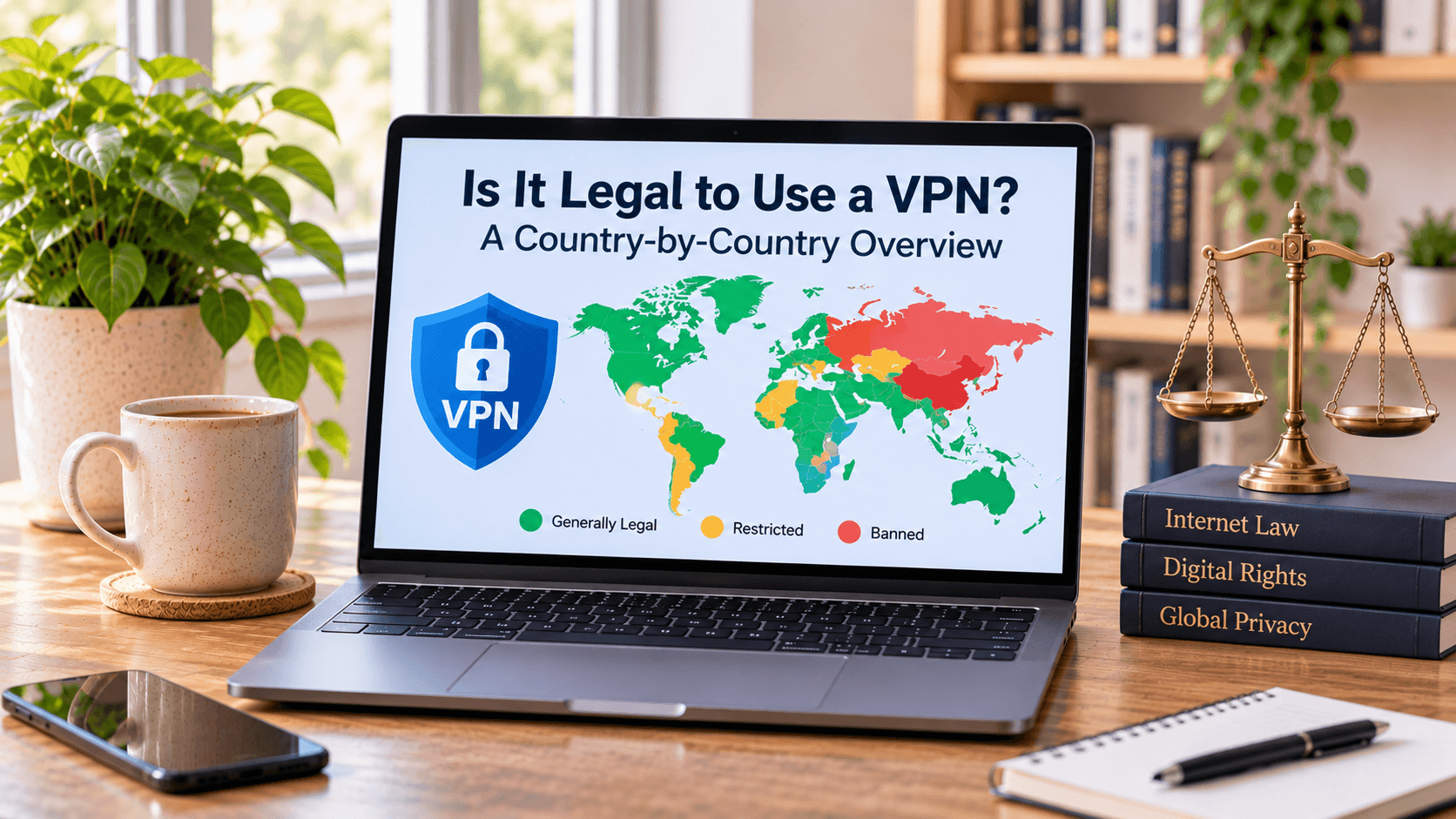
Using a VPN is legal in the vast majority of countries, including the United States, the United Kingdom, the EU member states, Canada, Australia, Japan and most of Latin America. A small number of countries restrict or ban VPNs, and the rules there change often. This overview explains the main differences. It is general information, not legal advice, so check the current rules before you travel.
Where VPNs are legal
In most democracies, a VPN is treated like any other privacy or security tool. Companies use them to connect remote staff, and individuals use them to protect public Wi-Fi connections and keep their browsing private from their internet provider. Using a VPN in these countries is legal; what you do while connected is still subject to the same laws as always.
Where VPNs are restricted or banned
The following are the best-known examples. Rules and enforcement vary and can change quickly.
- China: only VPNs approved by the government are permitted, and most foreign VPN services are blocked by the Great Firewall. Enforcement against individuals has historically been uneven, but access to unapproved VPNs is frequently disrupted.
- Russia: VPN providers are required to connect to the state's registry of banned websites, and services that refuse are blocked. Many popular VPNs have been blocked, and advertising VPNs has been restricted.
- Iran: the government permits only state-approved VPNs and blocks many others, while heavily censoring the internet.
- Belarus: the use of VPNs and other anonymization tools has been banned since 2015.
- Turkmenistan and North Korea: internet access is tightly controlled, and VPN use is effectively prohibited.
- United Arab Emirates and Oman: VPNs are legal for many purposes, including business use, but using a VPN to commit a crime or to access blocked services such as some calling apps can lead to heavy fines.
- Turkey and Myanmar: authorities block many VPN websites and services, and access varies with political events.
What actually changes in restrictive countries
In places like China and Iran, the main practical issue is technical blocking rather than prosecution of tourists. Governments use deep packet inspection to detect and block VPN traffic. That is why some providers offer obfuscation, which disguises VPN traffic as ordinary web traffic. Examples include ExpressVPN's automatic obfuscation, Surfshark's Camouflage and NoBorders modes, VyprVPN's Chameleon protocol and Proton VPN's Stealth protocol.
No VPN can guarantee access in heavily censored countries, and providers that work one month may be blocked the next. If you are traveling, install and test your VPN before you leave, because provider websites and app stores are often blocked once you arrive. Our best VPN for China list covers providers built for these conditions.
Legal does not mean anything goes
A VPN changes who can see your traffic, not what you are allowed to do. Activities that are illegal without a VPN, such as fraud, hacking or distributing copyrighted material, remain illegal with one. Our guide to torrenting safely explains why a VPN is not a shield against copyright law.
Terms of service are a separate question
Some activities are legal but break a company's rules. Streaming services, for example, may restrict access to libraries from other regions in their terms of service. Breaking those terms is not usually a crime, but it can lead to the service blocking your access or, in rare cases, suspending your account. See our guide to streaming with a VPN for details.
Using a VPN at work or school
Employers and schools can set their own rules for their networks and devices. Using a personal VPN on a work laptop may break company policy even where VPNs are legal, so check before you connect.
Bottom line
For most people, using a VPN is completely legal and a sensible way to protect your privacy. If you live in or travel to a country with restrictions, check the current rules, choose a provider with strong obfuscation and set it up before you go. And remember that a VPN never makes an illegal activity legal.